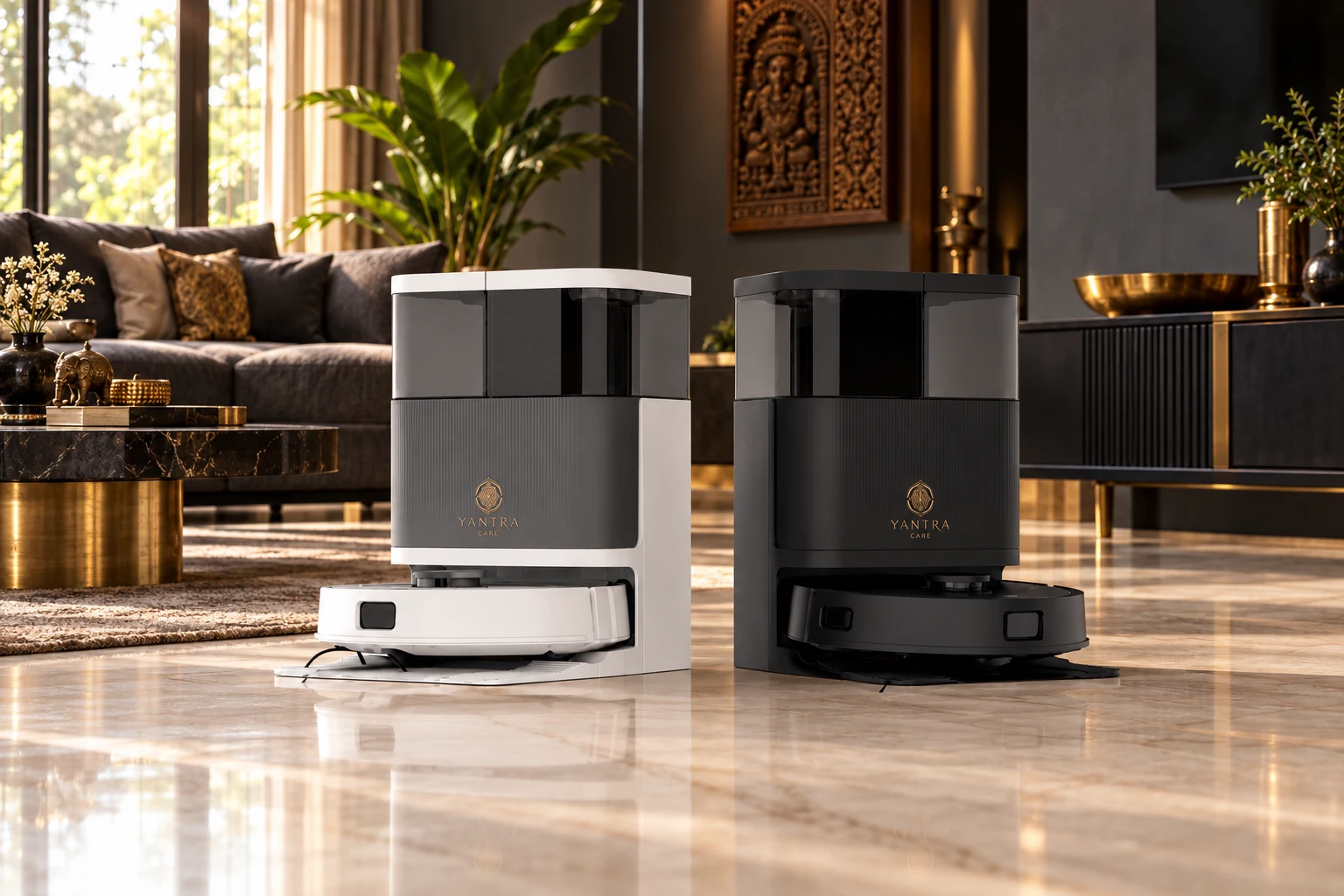
D63S
From dust to done.
Powerful cleaning. Smarter mapping.
A station that takes care of the cleanup.
₹61,000Listed price · confirm availability · white or black
*Supplied in-house vacuum-mode test claim. Runtime varies by mode, floor and use.
Know your D63S.
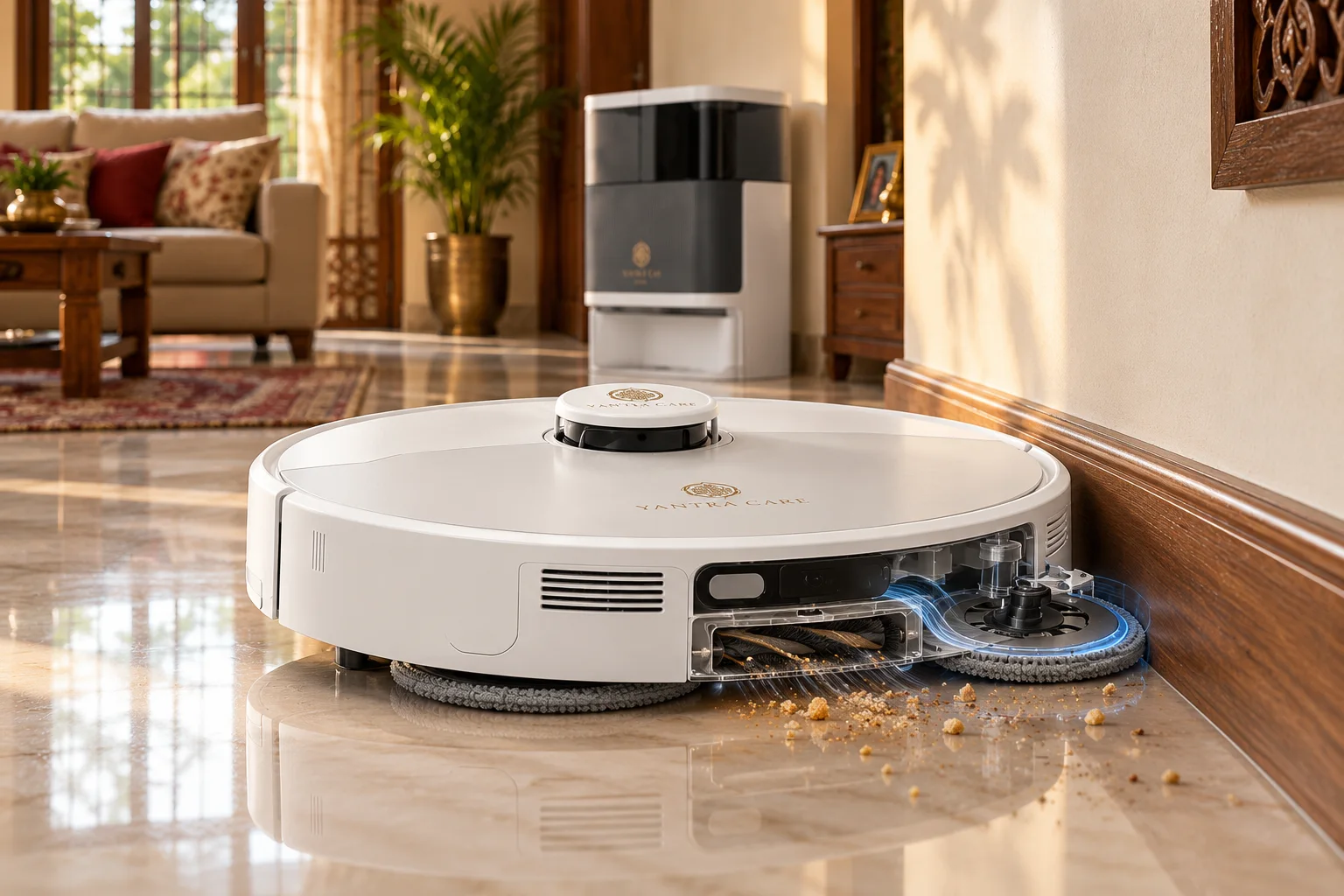
Powerful cleaning, inside and out.
Cleaning
Engineered for the everyday mess.
- Robot suction
- Up to 10,000 Pa
- Mopping
- Extendable dual rotary; 15 mm lift
- Dust bin / water tank
- 300 ml / 65 ml
- Threshold crossing
- Up to 20 mm
- Noise
- ≤70 dB
Station
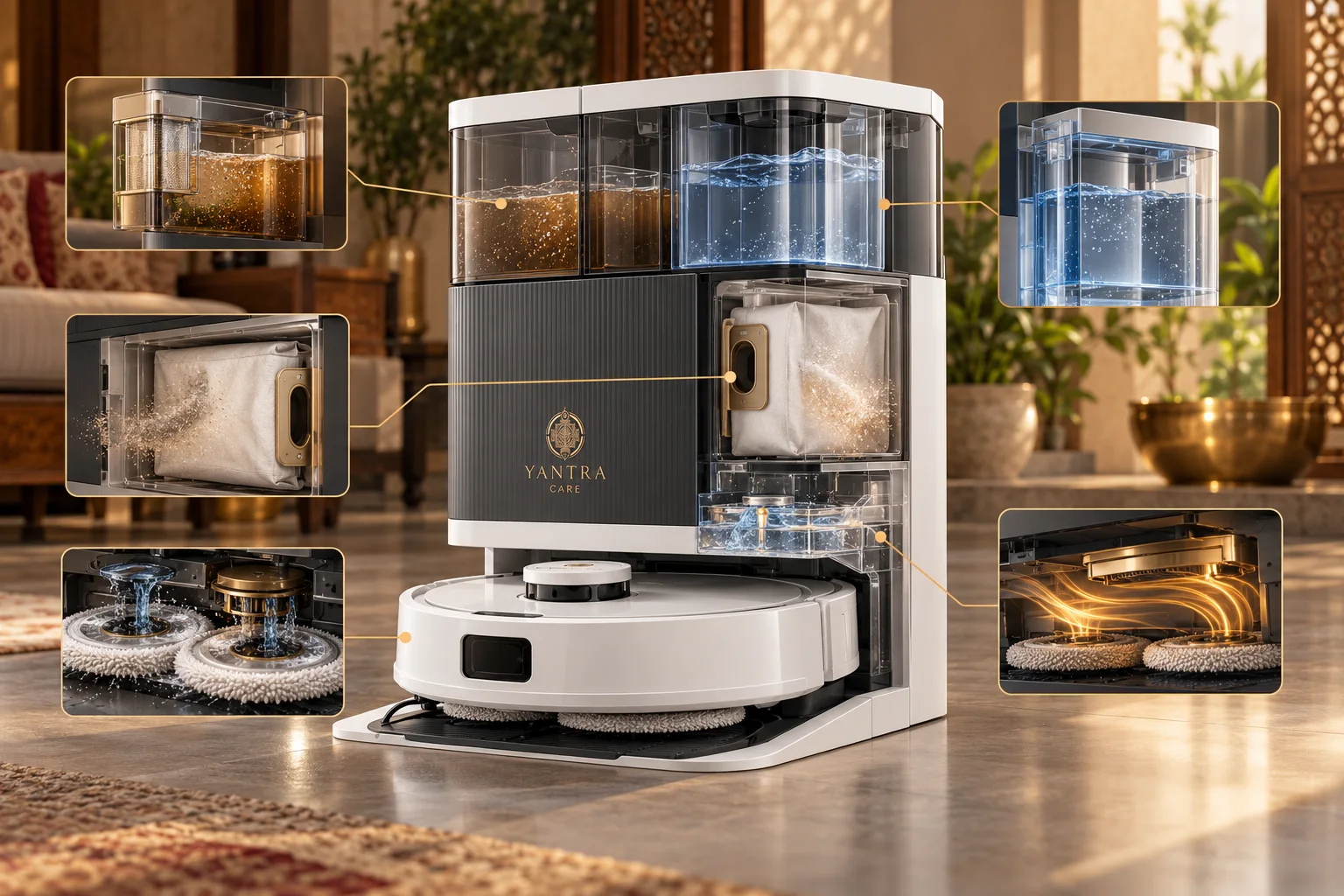
Cleans itself, so you have less to do.
- Dust collection
- 20,000 Pa; 3L bag
- Water tanks
- 4L clean + 4L waste
- Mop care
- Hot-water wash; PTC hot-air dry
- Cleaning solution reservoir
- 400 ml
- Tank & bag sensors
- Included
More cleaning.
Less maintenance.
The station collects dust, washes and dries the mops, and refills water.
Navigation & power
Smarter mapping. Cleaning on your terms.
- Navigation
- LDS + line laser
- Battery
- 5,200 mAh
- Runtime*
- Up to 370 min quiet / 250 min standard
- App & connection
- SmartLife; iOS / Android; 2.4 GHz Wi-Fi + Bluetooth
- Control
- Room, zone, spot, edge; OTA updates
- Carpet detection
- Ultrasonic with suction boost
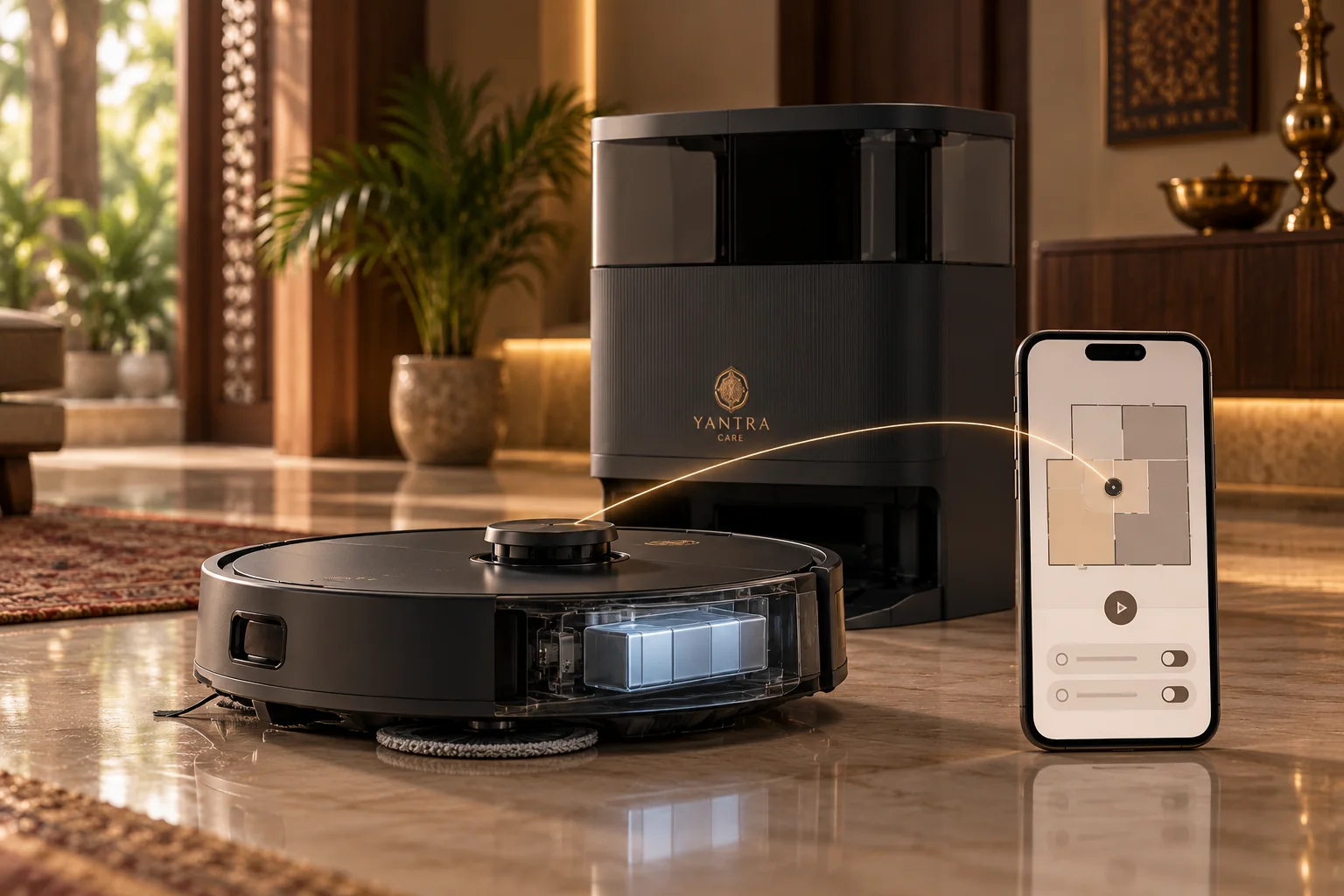
*Runtime depends on suction mode, floor type, layout and use. D63S figures are supplied in-house vacuum-mode test claims; Lite runtime is based on supplied product information. One-year robot warranty; confirm coverage and terms before purchase.
From map
to mop.
A smarter way to clean, every day.
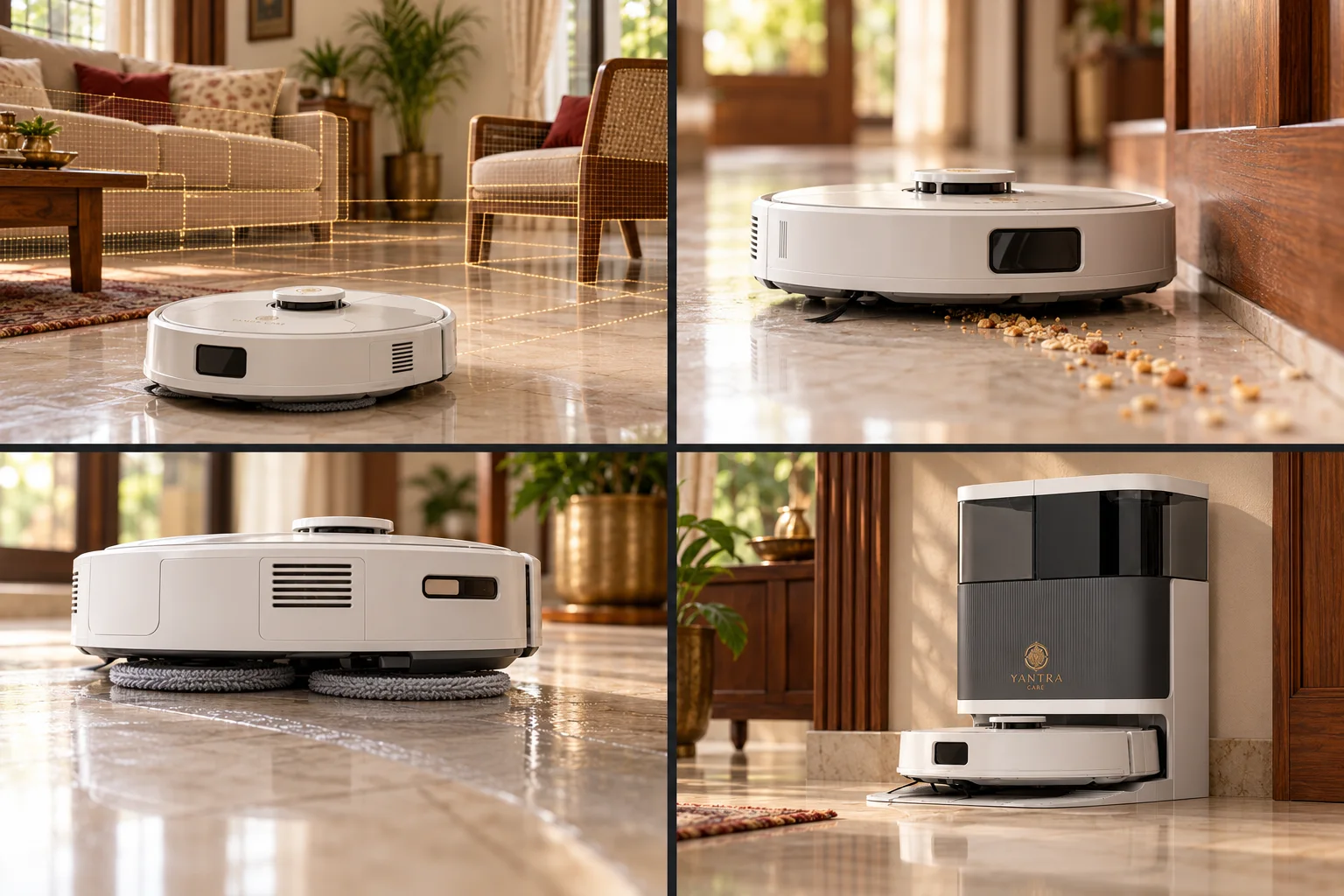
- 1
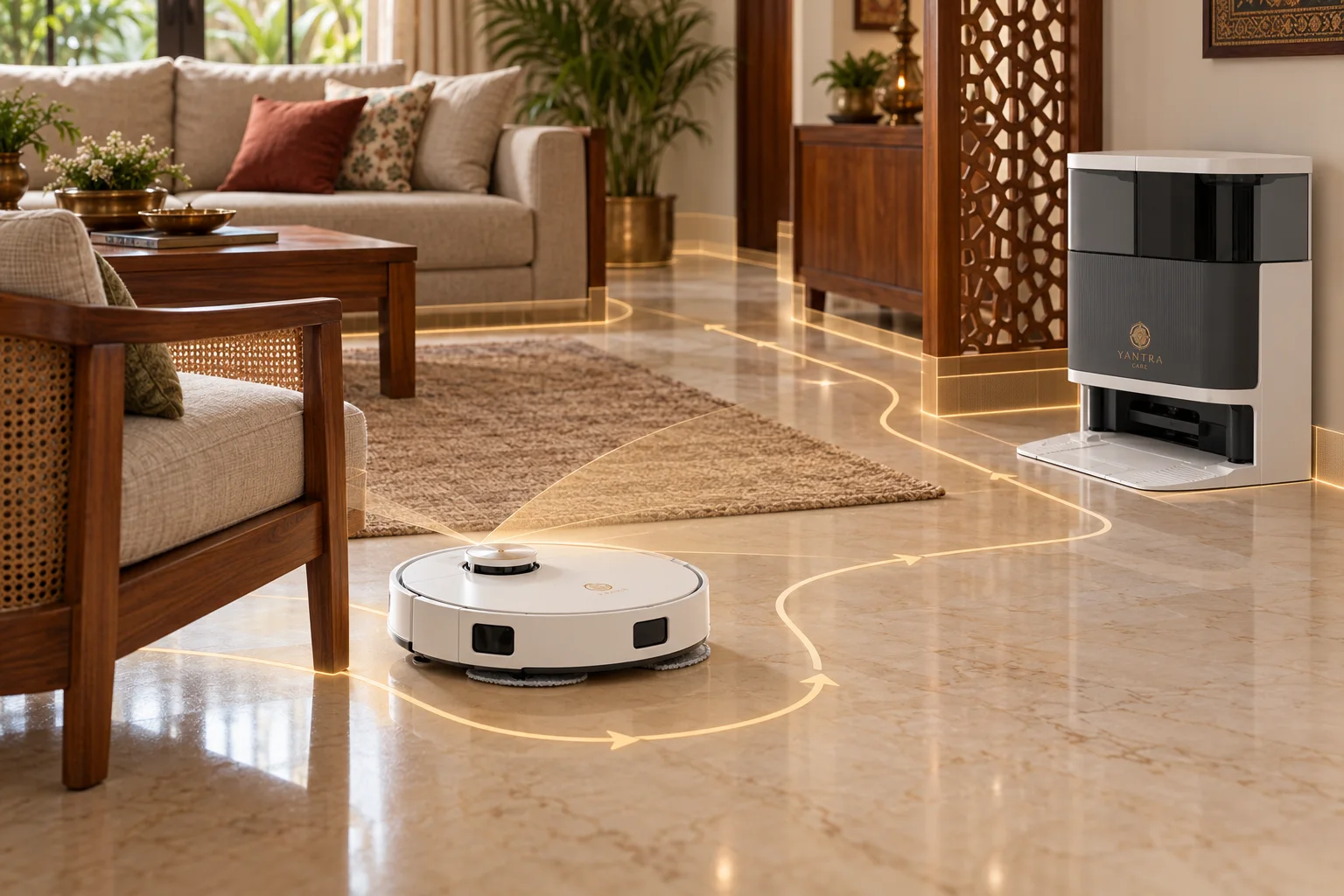
Find the route
Laser navigation measures the surroundings so the controller can plan a cleaning path.
- 2
Pick up everyday dirt
Wheel drives move the robot. Brushes guide dry dirt towards the suction inlet, bin and filter.
- 3
Wipe suitable hard floors
The mop assembly follows the cleaning route. Water flow and mop features depend on the model.
- 4
Return to the dock
The D63S station collects dust, washes and dries the mops, and refills water.
Designed outside.
Explained inside.
Explore the systems behind your D63S. Switch between the product and an illustrative exploded view.
Conceptual internal views explain the main systems. They are not verified engineering drawings or service instructions.
Before you choose.
Clear answers to the questions that matter.
How does LiDAR sensing or LDS laser navigation work?
LiDAR uses reflected laser light to measure distances and build a room map. The navigation system uses that map to plan cleaning routes. Yantra Lite has 360° LiDAR, RC60 has LiDAR mapping, and D63S uses LDS with line-laser navigation. Mapping and small-object avoidance are different capabilities.
What does Pa suction power mean, and is more Pa always better?
Pa means pascals, a pressure measurement used in suction specifications. D63S lists up to 10,000 Pa robot suction and RC60 lists 5,000 Pa. Pickup also depends on airflow, brush contact, floor type, filter condition and cleaning mode. A higher advertised Pa figure alone does not prove better cleaning.
Is robot suction the same as self-emptying station suction?
No. Robot suction picks dirt up from the floor; station suction transfers dirt from the robot into a dust bag. D63S lists 10,000 Pa maximum robot suction and 20,000 Pa station suction. RC60 lists 5,000 Pa robot suction and 17 kPa station suction. One kPa equals 1,000 Pa.
What is a BLDC motor in a robotic vacuum cleaner?
BLDC means brushless DC motor. In a vacuum system, the motor drives a fan that creates airflow for dust collection. The Yantra RC60 specification lists a BLDC motor and a 70W cleaning system. Electrical watts and suction pressure in Pa measure different things and should not be compared as if they were the same.
How often should I replace brushes, filters, mop pads and dust bags?
Yantra's indicative guidance is 6–12 months for the main brush, 3–6 months for side brushes and mop pads, and 2–4 months for filters. Dust-bag life depends on dirt volume and use. Inspect parts regularly and confirm RC60 or D63S compatibility before ordering.
Find the right fit
for your floors.
Compare all three models and see which one is right for your home.